
The Zkittlez Renaissance: Why Everyone's Chasing Z Genetics Right Now
From 2015 Cannabis Cup winner to the parent genetics behind the biggest hype strains of 2026, Zkittlez rewrote the rules. Discover how one Northern California collaboration created a terpene profile that changed what growers breed for, what collectors hunt, and what commands premium pricing in today's market.
The Zkittlez Renaissance: Why Everyone's Chasing Z Genetics Right Now
There's a shift happening in the cannabis community. From pheno hunts to Instagram drops to dispensary menus stacked five deep with candy terps, one genetic lineage keeps showing up: Zkittlez.
Not Zkittlez as a standalone strain. That's been around since 2015, winning Cannabis Cups and collecting trophies for its tropical fruit candy flavor. What's happening now is something different. Zkittlez has become the foundational genetics behind the most hyped crosses, limited drops, and competitive wins of the past year. If you're tracking the community conversation right now, you're seeing Zkittlez everywhere.
Here's why.
The Lineage That Rewrote Modern Breeding
Zkittlez came out of Northern California through a collaboration between 3rd Gen Family, Terp Hogz, and Dying Breed Seeds. The genetics are Grape Ape crossed with Grapefruit AllBudCannaConnection, with a third undisclosed strain stabilizing the profile. It was bred specifically for terpene expression AllBud, not THC percentage. That focus was unusual at the time.
The strain won 1st Place for Best Indica at the 2015 Cannabis Cups in San Francisco and Michigan, then took 1st Place at the 2016 Emerald Cup. But the real impact wasn't the awards. It was what breeders started doing with it.
Zkittlez introduced a tropical candy terpene profile that was loud, consistent, and breedable. When you crossed it with other elite genetics, the flavor carried through. That made it an ideal parent strain for anyone trying to build something new without losing the terps.
Runtz Changed Everything
In late 2016, someone in Los Angeles crossed Zkittlez with Gelato. The result was Runtz.
Runtz went from a small batch creation to a cultural phenomenon that rewrote the rules of how cannabis gets marketed, sold, and talked about Dark Coast Seed Co.. It debuted at the Emerald Cup where five pounds of flower sold out in under ten minutes. By 2020, it won Leafly's Strain of the Year.
Runtz proved that candy forward terpene profiles could command premium pricing and cultural currency. It wasn't just potent. It tasted like actual candy, looked like jewelry, and smoked smoother than anything most people had tried. The Zkittlez genetics were doing heavy lifting on flavor while Gelato brought creamy dessert notes and resin density.
The impact was immediate. Breeders started using Runtz (which is 50% Zkittlez) as a parent strain itself. According to Dark Coast Seed Co., Runtz now has 422+ documented descendants Dark Coast Seed Co.. That's not hype. That's a genetic legacy.
Rainbow Belts and the Zkittlez Doubling Strategy
If Runtz was Zkittlez crossed with something else, Rainbow Belts went further. It's Zkittlez crossed with Moonbow Seeds Here NowLeafly, and Moonbow itself is Do-Si-Dos crossed with Zkittlez. That means Rainbow Belts is effectively double stacked with Z genetics.
Archive Seed Bank identified Rainbow Belts phenotype #20 as the absolute pinnacle Piffinten, and they've been refining it through F2 and F3 generations. The result is a strain that tastes exactly like sweet lime and mixed berry candy on the inhale, leaving a highly distinct floral Zkittlez and doughy gas finish on the exhale Piffinten.
Rainbow Belts won countless water hash and flower competitions including the Ego Clash hash competition and High Times Cups. Growers who popped their own seeds found cup winning phenotypes from the same batch. That's genetic stability combined with terpene expression, and it's why Rainbow Belts keeps showing up in limited drops and pheno hunts that sell out immediately.
What Living Soil Does to Zkittlez Terps
This is where Flora & Flame's approach matters.
Zkittlez and its descendants aren't just genetically predisposed to high terpene production. They're also highly responsive to how they're grown. The candy terps everyone's chasing are volatile organic compounds. Their expression depends on plant health, nutrient availability, and metabolic activity.
Living soil doesn't just feed these plants. It triggers them. Beneficial bacteria like Bacillus and Pseudomonas colonize roots and unlock nutrients while simultaneously activating plant defense pathways. When Zkittlez senses these beneficial microbes, it responds by ramping up terpene biosynthesis as part of its immune response.
Mycorrhizal fungi extend root systems and dramatically increase nutrient absorption, supporting the high energy demands of producing aromatic compounds. Endophytic fungi like Trichoderma live inside plant tissues and release compounds that activate jasmonic acid and salicylic acid pathways. That's the biological trigger that tells Zkittlez to produce more of the terpenes that made it famous.
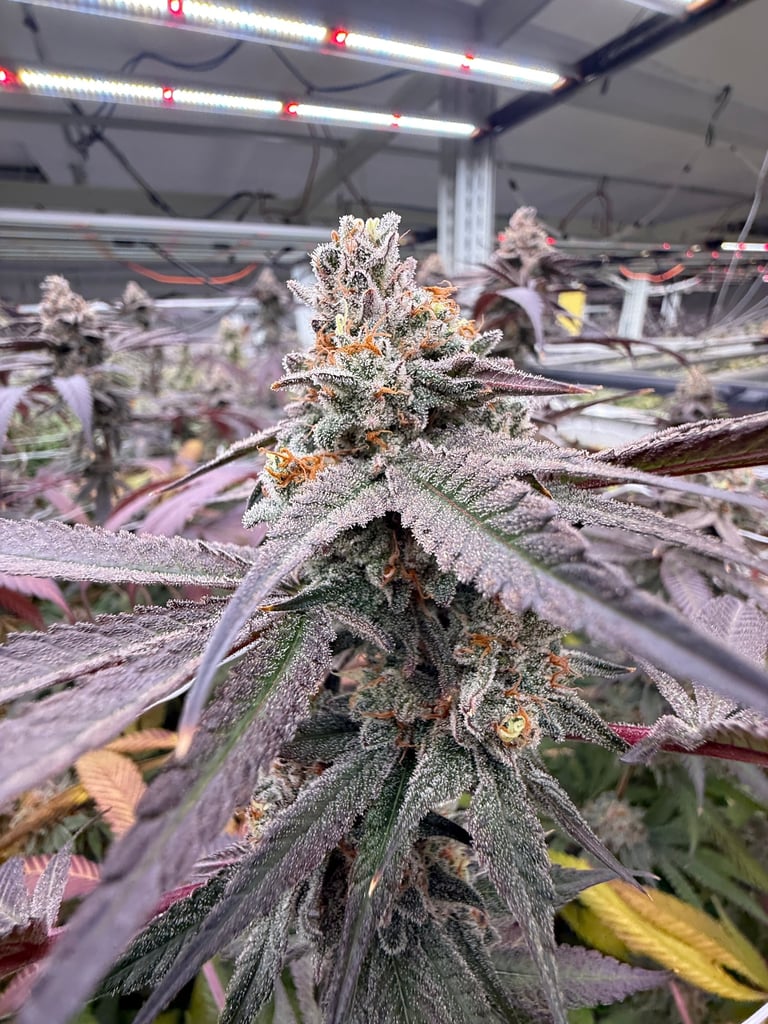
The difference is noticeable. Synthetically fed Zkittlez can hit high THC numbers and look frosty, but the terpene complexity falls off. Living soil grown Z genetics smell louder, taste more layered, and express the full spectrum of what the genetics are capable of. You're not just preserving the terps. You're amplifying them through biology.
The Grower's Perspective: Why Z Genetics Keep Winning
From a cultivation standpoint, Zkittlez and its crosses present specific challenges and rewards.
The original Zkittlez is notoriously finicky. It's picky about nutrients and environmental conditions, moderately challenging to grow, and yields are average at 350 to 450 grams per square meter indoors Secret Nature. But when you dial it in, the results are spectacular. The flavor and bag appeal make up for moderate yields.
Rainbow Belts, Runtz, and other Z crosses have addressed some of these issues. Breeders specifically selected for improved structure, resin density, and yield while preserving the candy terpene profile. That's why these crosses keep showing up in competition wins. They're easier to grow than the original while maintaining what made Zkittlez valuable.
Living soil makes these genetics more forgiving. The microbial ecosystem buffers pH fluctuations, improves nutrient bioavailability, and reduces stress from environmental variables. Zkittlez grown in living soil shows better resilience during flower, more consistent terpene expression across phenotypes, and stronger finishing weight without sacrificing flavor.
The Cultural Moment
Zkittlez hype right now isn't just about one strain. It's about what that genetic lineage represents.
For a decade, the industry chased THC percentages. Higher numbers meant better product, or so the thinking went. But Zkittlez and its descendants proved that terpene profiles matter more than raw potency for the overall experience. A 20% THC Zkittlez cross with a full terpene spectrum will hit different (and often better) than a 30% THC strain with muted terps.
The community recognized this. Collectors started hunting specific phenotypes based on smell and flavor, not just testing numbers. Growers started prioritizing terpene preservation in their drying and curing processes. Extractors realized that Zkittlez genetics are perfect for live resin and rosin because the terpenes are unstoppable when properly cultivated and processed JointCommerce.
Social media amplified this shift. When a grower drops a limited batch of Rainbow Belts or a new Runtz cross, the conversation isn't about THC. It's about which phenotype has the best nose, which grower nailed the cure, and whether the terps translate to concentrate. That's a different kind of hype than what drove the market five years ago.
What's Next for Z Genetics
The breeding isn't slowing down. Zkittlez works as an augment to other strains, bringing its benefits out when crossed AllBud. You're seeing this with Animal Zkittlez (Zkittlez × Animal Cookies), Zkittlez Pie (Zkittlez × Georgia Pie), and countless other crosses where breeders are using Z genetics to add flavor complexity to heavyweight indica or sativa dominant lines.
Terp Hogz and 3rd Gen Family, the original Zkittlez breeders, continue to refine the varietal and make new crosses. Archive Seed Bank is pushing Rainbow Belts through F3 stabilization. Independent breeders are hunting rare phenotypes and releasing limited seed drops based on specific terpene expressions.
The trend isn't fading. If anything, it's accelerating. As more consumers prioritize flavor and experience over raw potency, Zkittlez genetics will continue dominating the premium market. The strains that win competitions, sell out drops, and command top shelf pricing in 2026 are disproportionately Z lineage or Z crosses.
The Bottom Line
Zkittlez hype isn't hype. It's the market recognizing what elite genetics combined with proper cultivation can produce.
The community is chasing these strains because they deliver what other genetics can't: consistent candy forward terpene profiles that translate across consumption methods, stable genetics that breed true while allowing phenotype variation, and an experience that prioritizes flavor and effect quality over testing numbers.
At Flora & Flame, we're growing Zkittlez descendants in living soil specifically because that's what these genetics deserve. The biological systems underground activate the terpene production that made Z famous in the first place. You're not just getting Zkittlez. You're getting what Zkittlez can do when the soil food web is doing the work it evolved to do over millions of years.
The renaissance is happening right now. The question isn't whether Zkittlez will stay relevant. It's which crosses will define the next wave.